EU Single Permit — One Document for Work and Residence
10/03/2026
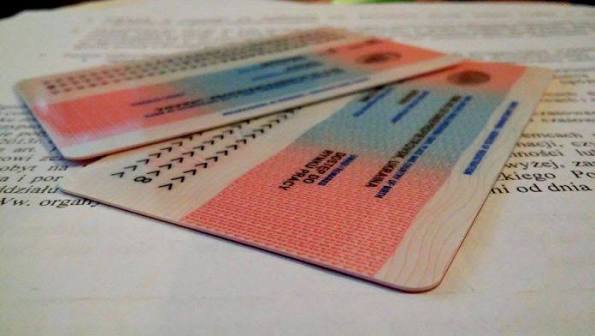
For years, a non-EU skilled worker had to run two separate files to work legally in Europe: one for the work permit, one for the residence permit. The EU's new directive — Directive (EU) 2024/1233, a recast of Directive 2011/98/EC — merges them into a single "single permit."
What the single permit is
One administrative act granting two rights at once: the right to reside and the right to work in the destination country. Instead of two decisions and two document sets, one single application is filed and one permit is issued.
⚠️ Important: the application is filed by the employer or their representative — not by the worker. So the quality of the file and the credibility of the job offer matter as much as the candidate's own documents.
What actually changed
• One procedure instead of two — residence and work in a single permit
• Shorter decision deadline: from four months down to 90 days (plus a 30-day extension in complex cases)
• Applying from inside the EU: holders of a valid residence permit can apply without returning home
• Stronger worker protection: rights information, complaint mechanisms, inspections and employer penalties
• Equal treatment: pay, working conditions, social security, training — non-EU and local workers on the same footing
Changing employer
A worker may change employer; the authorities have 45 days to verify (extendable by 15). Crucially, unemployment alone is not grounds for withdrawal — the worker has 3 to 6 months to find new employment.
Timeline
📅 Adopted 24 April 2024 (Official Journal 30 April)
📅 National transposition deadline: 21 May 2026 — applicable from 22 May 2026
📅 Directive 2011/98/EC repealed on the same date
⚠️ 17 member states (including Poland) received formal notice for not yet complying. Romania is not on that list — it implemented on time.
🚫 Not applicable in Denmark and Ireland.
How Romania implemented it
Romania implemented the directive through GEO 32/2026 (adopted 23 April 2026), scrapping the old permit (aviz de angajare) and replacing it with a single online application on
• 2026 quota: 90,000 non-EU workers (approved by HG 1169/2025)
• Two visa categories: D/AM1 (highly qualified) and D/AM2 (shortage occupations / seasonal)
• D/AM2 is issued only through an "authorised agency" — one authorised by ANOFM and listed in the RAPS register
• Guarantees: EUR 75,000 for the agency, EUR 1,000 per worker for the employer
🚨 Critical and recent: the Bucharest Court of Appeal has suspended the shortage-occupations list (Ordin 1073/2026). In practice, the D/AM2 route is currently inactive, leaving only D/AM1. This must be verified before making any commitment to a candidate.
What this means for skilled candidates
✅ Faster: 90 days instead of four months
✅ Lighter file: one application, one permit, one appointment
✅ More security: unemployment ≠ permit revoked; the right to change employer
✅ Guaranteed rights: parity with local workers on pay and social security
⚠️ What is NOT guaranteed: the final visa decision rests solely with the official authorities of the destination country. No agency — including us — can guarantee a visa. Anyone offering a "guaranteed visa" is selling something that is not theirs to sell.